
The Meaning Behind Heraldic Colors: A Guide to Tinctures
At varius vel pharetra vel turpis
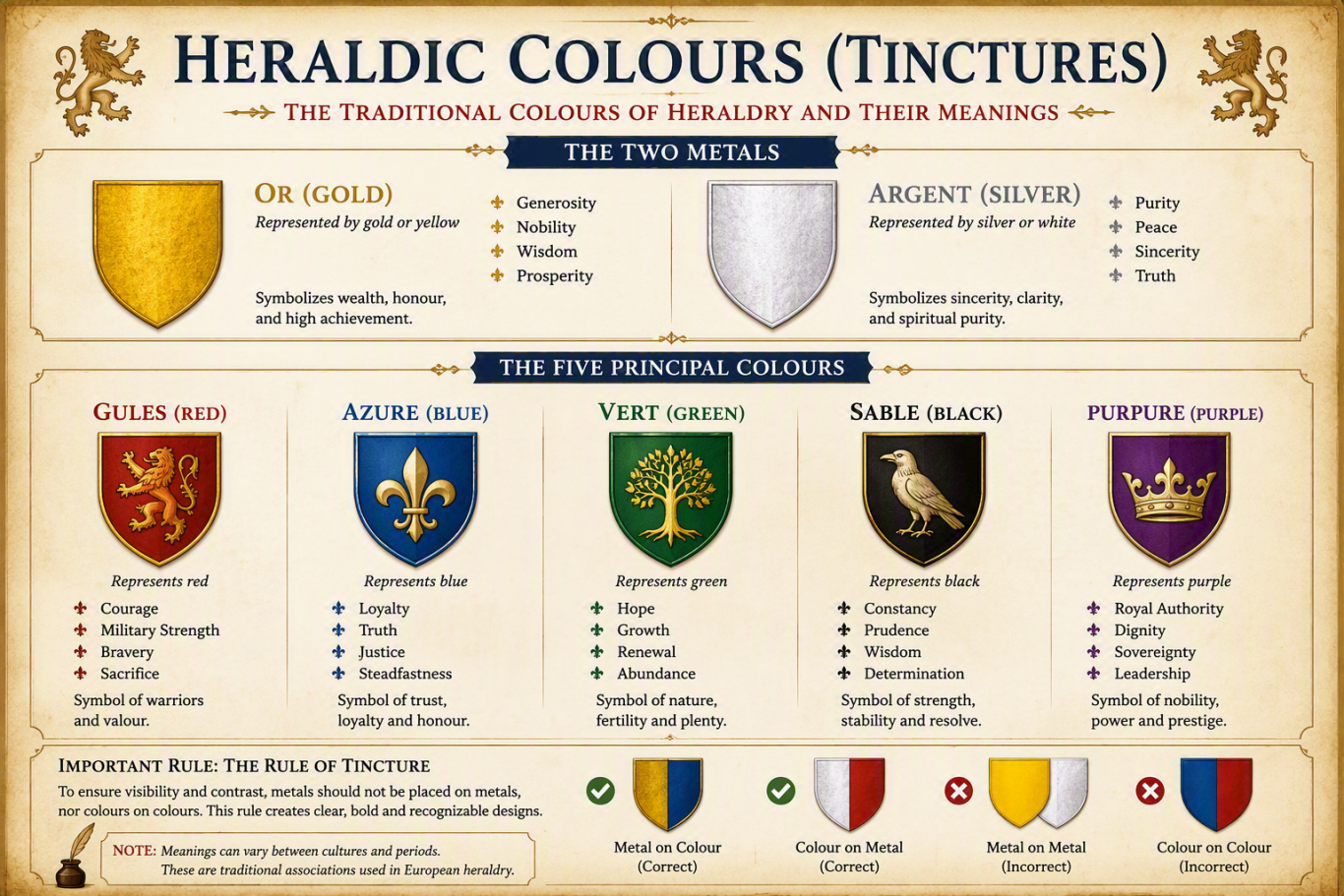
Heraldic colours, known as tinctures, are far more than decorative elements. For centuries, they have carried symbolic meanings that helped tell the story of individuals, families, and institutions. Understanding these traditional colours can add a deeper appreciation of heraldry and help you better interpret coats of arms from around the world.
What Are Tinctures?
In heraldry, colours are referred to as tinctures. They form the foundation of every coat of arms and are governed by rules developed during the Middle Ages to ensure designs remained clear and recognisable, even from a distance.
Traditional heraldry consists of:
- Two metals
- Five principal colours
- Several furs and special variations
Each tincture has developed symbolic associations over time, although meanings can vary slightly across heraldic traditions.
The Two Heraldic Metals
Or (Gold)
Represented by gold or yellow, Or is commonly associated with:
- Generosity
- Nobility
- Wisdom
- Prosperity
Gold often appears in royal and noble arms, reflecting honour and achievement.
Argent (Silver)
Displayed as silver or white, Argent symbolises:
- Purity
- Peace
- Sincerity
- Truth
Its bright appearance made it a popular choice for creating contrast within heraldic designs.
The Five Traditional Colours
Gules (Red)
One of the most recognisable heraldic colours, Gules represents:
- Courage
- Military strength
- Bravery
- Sacrifice
Many historic warrior families incorporated red into their arms.
Azure (Blue)
Azure is traditionally linked with:
- Loyalty
- Truth
- Justice
- Steadfastness
Blue remains one of the most popular colours in heraldry due to its strong association with trust and honour.
Vert (Green)
Vert symbolises:
- Hope
- Growth
- Renewal
- Abundance
Families connected with agriculture or land ownership often featured green elements in their heraldic achievements.
Sable (Black)
Sable carries meanings of:
- Constancy
- Prudence
- Wisdom
- Determination
Its striking appearance also creates strong visual contrast within a coat of arms.
Purpure (Purple)
Less common than other tinctures, Purpure is associated with:
- Royal authority
- Dignity
- Sovereignty
- Leadership
Historically, purple dyes were expensive, making the colour a symbol of prestige.
Why Colours Matter in Heraldry
Heraldic colours were never chosen randomly. Together with animals, symbols, crests, and mottos, tinctures helped communicate identity and values. A shield featuring a red lion on a gold field, for example, could suggest both courage and nobility.
These symbolic combinations transformed coats of arms into visual stories that could be recognised across generations.
Understanding Your Family's Heraldic Design
If your surname is associated with a historic coat of arms, learning the meaning of its colours can provide fascinating insight into the traditions and ideals represented within the design.
While heraldry does not prove family relationships on its own, it offers a unique window into the history, symbolism, and heritage connected with many surnames.
Conclusion
The colours found in heraldry are more than artistic choices. They reflect centuries of tradition, symbolism, and storytelling. By understanding tinctures and their meanings, you can gain a deeper appreciation of coats of arms and the rich heritage they represent.
Whether you are researching your family history or simply exploring the world of heraldry, the language of colour remains one of its most fascinating traditions.
What Is a Family Crest? Understanding the Difference Between a Crest and a Coat of Arms
Many people use the terms family crest and coat of arms interchangeably, but in heraldry they have distinct meanings. Understanding the difference can help you better appreciate your family's heritage and the rich traditions behind heraldic symbols.
What Is a Coat of Arms?
A coat of arms is a complete heraldic design traditionally granted to an individual or family. It typically appears on a shield and may include additional elements such as a helm, mantling, supporters, a crest, and a motto.
Historically, coats of arms were used to identify knights and noble families on the battlefield and in official documents. Over time, they became important symbols of lineage, achievement, and identity.
What Is a Crest?
The crest is only one part of a complete coat of arms. It sits above the helmet and often features an animal, object, or symbolic figure that represents the armiger's values or accomplishments.
Because crests are often visually striking, the term "family crest" became widely used as a shorthand for the entire coat of arms. However, in traditional heraldry, the crest is just one component of the overall achievement.
Why Do Heraldic Symbols Matter?
Heraldic designs tell a story. Every colour, animal, and symbol can carry a specific meaning:
- Lions often represent courage and bravery.
- Eagles can signify strength and leadership.
- Gold may symbolise generosity.
- Blue is traditionally associated with loyalty and truth.
These symbols helped distinguish families and communicate their achievements across generations.
Discovering Your Family's Heraldic Heritage
Many families have surnames associated with historic coats of arms recorded in heraldic archives. Exploring these records can provide fascinating insights into your surname's history and origins.
Whether you're researching your family tree or looking for a unique gift, a beautifully presented coat of arms can be a meaningful connection to the past.
Conclusion
While a family crest and a coat of arms are not technically the same thing, both are important parts of heraldic tradition. Learning about these symbols can open the door to a deeper understanding of your family's heritage and the history behind your surname.
How Heraldry Helps You Explore Your Family History
Family history research has never been more popular. With online archives and DNA testing making genealogy more accessible than ever, many people are looking for new ways to connect with their ancestors. Heraldry offers a fascinating window into that past.
Why People Research Their Family History
For many people, genealogy begins with simple curiosity:
- Where did my family come from?
- What does my surname mean?
- Did my ancestors have a coat of arms?
- What traditions were important to my family?
Finding answers to these questions can create a stronger sense of identity and connection across generations.
Heraldry as a Historical Record
For centuries, heraldic records were carefully maintained by official authorities. These records can provide valuable information about family names, regions of origin, and historical connections.
Although a coat of arms was originally granted to an individual rather than an entire surname, heraldic records can still be an excellent starting point for family history research.
Understanding Surname Origins
Many surnames originated from:
- Occupations
- Places of residence
- Personal characteristics
- Family relationships
Researching the history of your surname alongside heraldic records can reveal how your family name evolved over time and where your ancestors may have lived.
Creating a Family Legacy
One of the most rewarding aspects of family history research is sharing discoveries with future generations. Many families choose to display their coat of arms, surname history, or genealogical findings as a way of preserving their heritage.
A professionally presented heraldic print can become a treasured family heirloom that sparks conversations for years to come.
Conclusion
Heraldry and genealogy work hand in hand. While family history research uncovers names, dates, and places, heraldry brings those stories to life through powerful symbols and centuries-old traditions. Together, they offer a unique way to explore and celebrate your family's heritage.